

RecallFDA Early Alert
Heraeus removes vascular guidewires whose coating may flake off
Some Heraeus vascular guidewire lots may shed coating into the blood; here is what the FDA's Early Alert covers and what a patient with later complications can do.
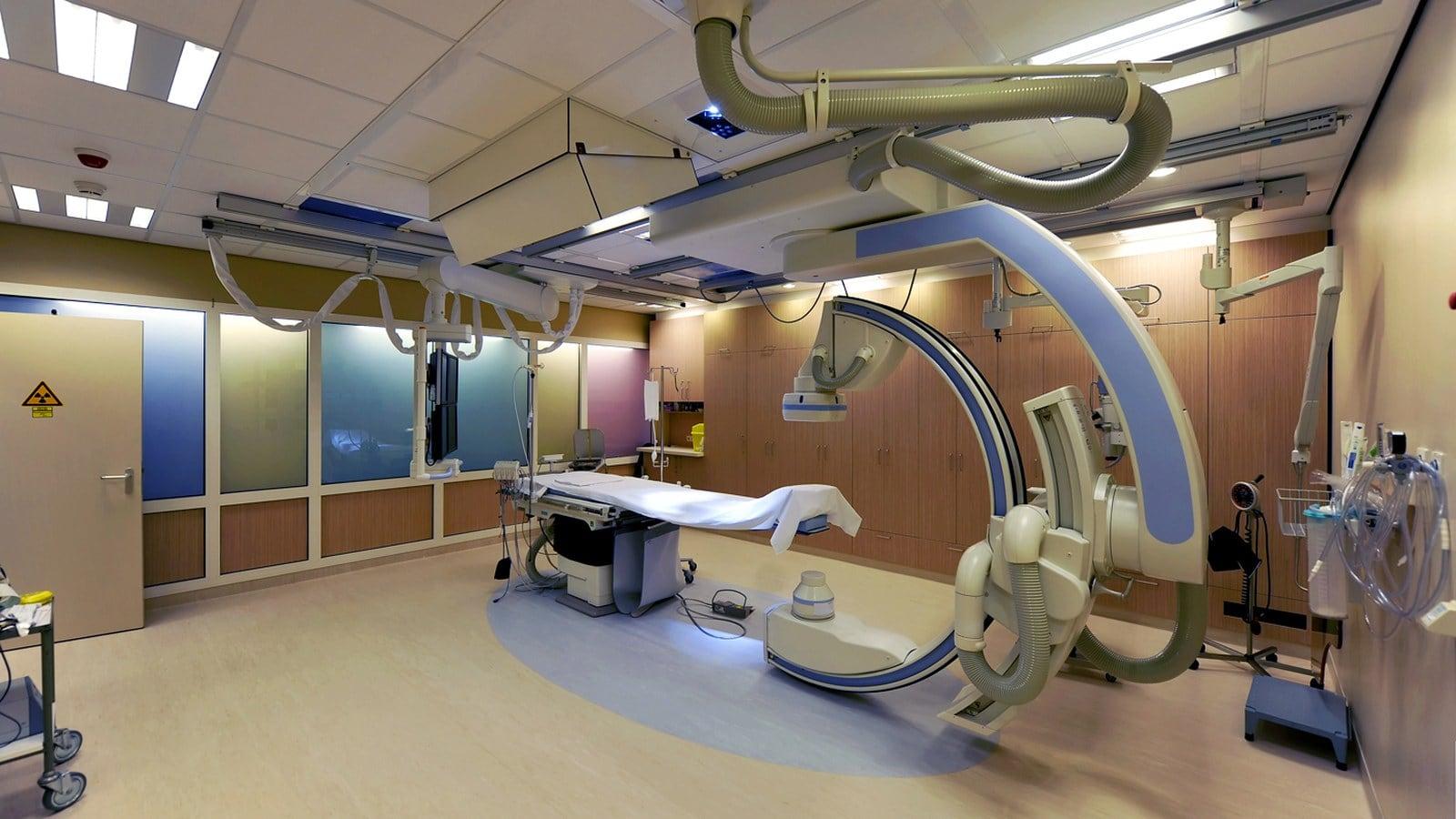
Heraeus Medical Components, doing business as Heraeus Medevio, sent all affected customers a voluntary recall letter on November 4-5, 2026, recommending that certain vascular guidewires be pulled from use and sale.1 The Food and Drug Administration (FDA) flagged the letter in an Early Alert posted November 20 and calls it a potentially high-risk device issue: the company says the wires' coating can clump and flake.12
What it means for you: A guidewire is a thin, flexible wire a doctor slides into a blood vessel through a needle to guide tubes into place.13 The company says the coating on some lots can clump and come off, and loose bits could travel in the blood and lead to a blockage.1 As of November 5, the company had reported no serious injuries or deaths.1 If you later had problems after a procedure, ask which device was used and get your records.
Which guidewires are affected
The wires are a nickel titanium alloy with a radiopaque metal coil tip (visible on X-ray) and a hydrophilic (water-attracting) coating.1 They are meant for entering peripheral blood vessels (those outside the heart, such as the vessels of the arms and legs) through the skin, and are not for use in the heart's arteries or the brain's blood vessels.14
MedlinePlus, from the National Library of Medicine, describes one use: to open a blocked peripheral artery, a balloon catheter is pushed over a guide wire into the blocked area, and the balloon and all the wires are removed at the end.3
The FDA's alert lists these products:
- Navilyst Vascular Guidewire and Spectrum Vascular Guidewire, models H965457461 and H9654574711
- Arrow Marked Guidewire, models PW-18080-HN and PW-16130-HN1
Counted row by row, the FDA's spreadsheet of affected products lists 126 lots, each with its model number, unique device identifier and lot number.5 It also lists a third Arrow model, PW-18080-HS, in 28 lots; the alert page does not name it.15
What can go wrong with the coating
Heraeus Medevio says the coating can swell unevenly when wetted with saline (salt water) and clump, most often on the distal coil, the far end of the wire.1 When it clumps, the coating is more likely to flake, shift or come off.1 Particles could then enter the patient's bloodstream and could lead to a thromboembolic event (a blocked blood vessel), depending on the size and number of particles.1
The FDA adds that coated devices used inside blood vessels carry the risk of hydrophilic polymer embolization (HPE), coating material that breaks loose and travels in the blood.1 The risks are greatest when it could affect the heart, lungs, brain, kidneys, grafts or areas with poor circulation.1 Reported consequences of HPE range from deposits that cause no symptoms to blocked vessels, stroke, organ failure and death.1
The FDA lists these harms for coated devices in general, and says it is still reviewing information.1
What customers were told to do, and what an Early Alert means
For customers who got the letter: what the FDA and the company said to do
- 1
Use and distribution. Immediately stop use and distribution of affected products.1
- 2
Records. Review inventory and distribution records for affected products.1
- 3
Quarantine. Quarantine affected lots and products.1
- 4
Notice. Make sure all relevant facilities and staff know, and tell any further customers to stop use.1
An Early Alert is the FDA's quick public notice of a potentially high-risk removal or correction, issued for all medical devices since September 29, 2025.6
An Early Alert compared with a classified recall
| Early Alert | Classified recall | |
|---|---|---|
| Has the FDA found it meets the recall definition? | Not necessarily6 | Yes a removal or correction for a problem that violates FDA law7 |
| Risk class | Not yet classified (FDA status: collecting information)267 | Class I, II or III, by relative degree of risk7 |
| What it signals | A potentially high-risk issue the FDA believes is likely to be the most serious type of recall12 | Class I: a reasonable chance of serious health problems or death; Classes II and III are lower risk7 |
Early Alert
- Has the FDA found it meets the recall definition?
- Not necessarily6
Classified recall
If you had a procedure and later had complications
If you had a blockage, a stroke or another problem after a procedure, get medical care first and tell your doctor about this alert. You or your doctor can report a suspected problem to the FDA's MedWatch program.18
Then ask the doctor or hospital which guidewire was used, including the brand, model and lot number. Federal rules require a unique device identifier on device labels and packages, with some exceptions; it can include the lot number and comes in a machine-readable form that can be entered into an electronic patient record.9
Under the privacy rule of the Health Insurance Portability and Accountability Act (HIPAA), 45 C.F.R. § 164.524, you have a right to inspect and get a copy of your health information in a provider's records (the rule's "designated record set"), with some exceptions.10 Ask for the procedure note and any supply or device record that names the model and lot. A guidewire's lot number may not have been written into your chart; ask anyway.
An alert is not proof that a wire caused any particular injury. In New Jersey, a manufacturer is liable under the state's product liability law only if the person bringing the claim proves that the product that caused the harm was not reasonably fit, suitable or safe for its intended purpose because of a listed defect (N.J.S.A. 2A:58C-2).11 One listed defect is a product that deviated from the manufacturer's own design specifications or performance standards.11
In Pennsylvania, an action for injuries caused by the wrongful act, neglect or negligence of another must be started within two years (42 Pa.C.S. § 5524(2)).12 In New Jersey, except as otherwise provided by law, a personal injury action must be started within two years after the claim accrued (N.J.S.A. 2A:14-2).13 When a clock starts in a particular case is a question for a lawyer. If you think a device hurt you, talk with one early.
Questions about how this affects you?
If you or someone in your family was hurt and you want to understand your options, you can talk with a lawyer at CM Injury at (267) 936-2233. The conversation is free and confidential.
Sources
- Early Alert: Heraeus Medical Components Removes Vascular Guidewires (FDA)U.S. Food and Drug Administration
- FDA Medical Device Recalls and Early AlertsU.S. Food and Drug Administration
- MedlinePlus: Angioplasty and stent placement - peripheral arteriesmedlineplus.gov
- MedlinePlus: Peripheral Arterial Diseasemedlineplus.gov
- FDA attachment: Full List of Affected Product (spreadsheet)U.S. Food and Drug Administration
- What is an Early Alert? (FDA)U.S. Food and Drug Administration
- What is a Medical Device Recall? (FDA)U.S. Food and Drug Administration
- FDA MedWatch reporting homeU.S. Food and Drug Administration
- FDA: UDI BasicsU.S. Food and Drug Administration
- 45 CFR 164.524 Access of individuals to protected health information (eCFR)ecfr.gov
- N.J.S.A. 2A:58C-2 (official NJ statutes, lis.njleg)New Jersey Legislature
- 42 Pa.C.S. § 5524 (Two year limitation), palegis.us official textPennsylvania General Assembly (palegis.us)
- N.J.S.A. 2A:14-2 (official NJ statutes, lis.njleg)New Jersey Legislature
Attorney Advertising. CM Injury (Cavaliere & Mangiaracina, PLLC), 161 Washington Street, Suite 1010, Conshohocken, PA 19428. (267) 936-2233.
Prepared by CM Injury with AI tools, from the public records cited on this page.
This article is general information, not legal advice, and reading it does not create an attorney-client relationship. Laws change and every case turns on its own facts.
Images: Photograph, Johan Krommenhoek, via Wikimedia Commons (public domain).
How we report: our sources, fact-checking and corrections.