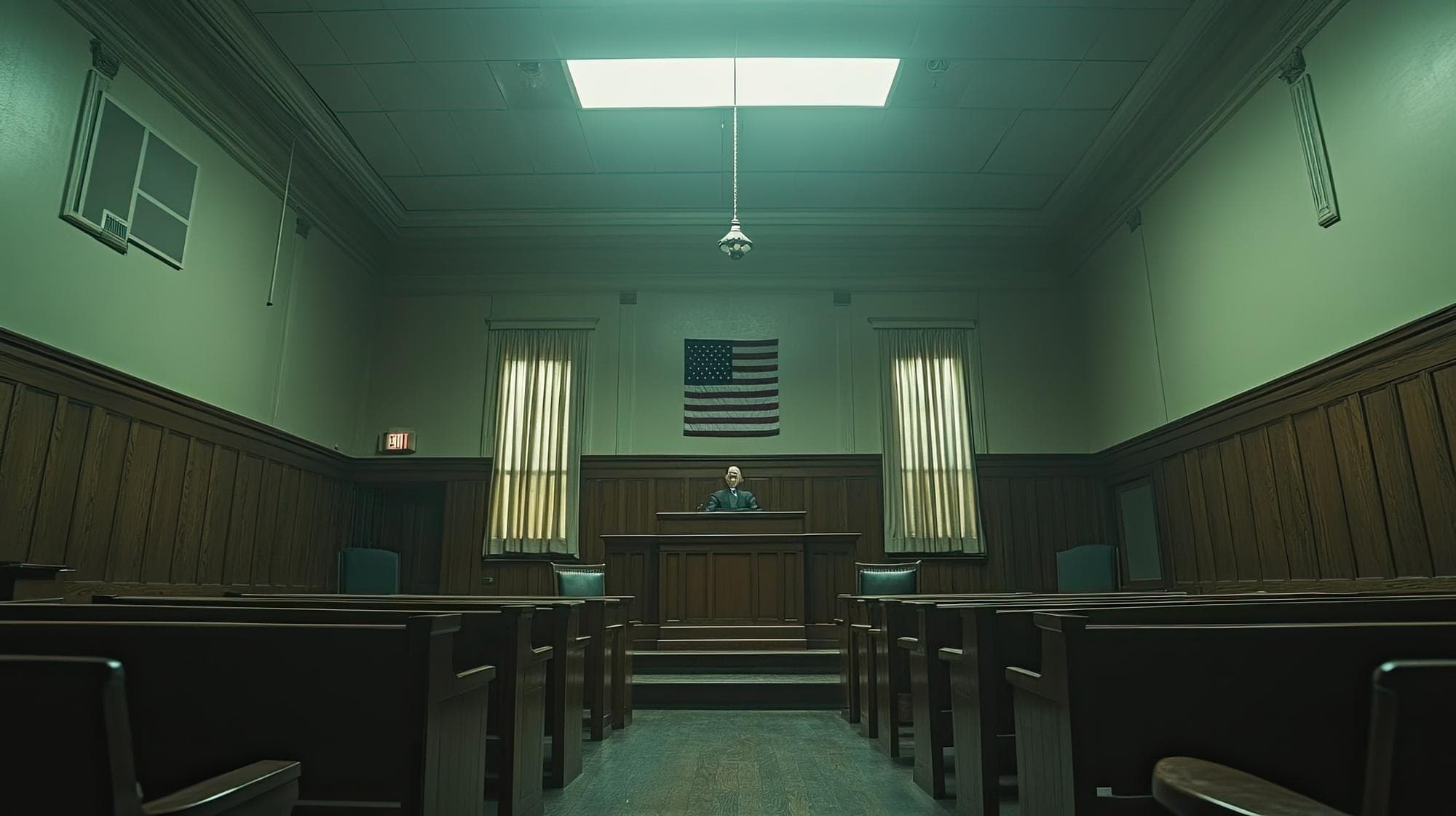

Court rulingN.J. Supreme Court
No sign immunity for NJ towns that skip required low-bridge signs
New Jersey's Supreme Court reinstated a jury verdict against Newark after a tractor trailer hit an unmarked low railroad overpass, holding the required warning signs are not "ordinary" signs.
On November 19, 2026, the Supreme Court of New Jersey ruled unanimously in Wilson v. City of Newark, No. A-21-25, that a municipality's failure to post the low-clearance signs mandated by N.J.S.A. 27:5G-4 is not immunized by N.J.S.A. 59:4-5.1 The court reversed the Appellate Division and reinstated the jury's verdict.1
What it means for you: When a railroad bridge over a New Jersey road is under 14 feet 6 inches, the town, county or State in charge of that road must post warning signs.2 If it does not, and you are hurt, it cannot use the usual rule protecting its sign choices.1 You must still show, among other things, a dangerous road caused your injury and it is obvious no careful person would approve the failure.13 A claim notice is generally due within 90 days.45
“We hold that signs mandated by 27:5G-4 are not “ordinary” within the meaning of 59:4-5 because public entities do not have discretion over whether or not to post them.”1
The question: is a required sign an "ordinary" sign?
New Jersey enacted its low-clearance sign law in 1986 to stop commercial vehicles from getting wedged between the road and a bridge because height limits were poorly posted.1
The Tort Claims Act, the law that sets when New Jersey public bodies can be sued, says a public body is not liable for an injury caused by the failure to provide "ordinary traffic signals, signs, markings or other similar devices".16 In an earlier case, the court held that this protects a public body's "initial discretionary decision" whether to post a sign at all.1
Newark argued that the required signs are ordinary signs, so it was immune.1 The Appellate Division, the court below, found the claim barred by that immunity and said the city has discretion over where it places these signs.1
The rule, step by step
Discretion over where to put a sign is not the same as discretion over whether to post it at all.1
How a low-bridge sign claim against a New Jersey town works now
- 1
A low railroad bridge. A railroad bridge with less than 14 feet 6 inches of clearance must have its maximum clearance posted on or in advance of it.12
- 2
A warning at the last turn-off. Signs warning drivers of the low bridge must also be posted at the last safe exit or detour before it.2
- 3
No choice, no immunity. The town has no discretion over whether to post these signs, so they are not "ordinary" signs and the sign immunity does not cover failing to post them.1
- 4
The claim must still be proved. Failing to post a required sign does not on its own create liability; the injured person must still show a dangerous condition under N.J.S.A. 59:4-2.13
- 5
Palpably unreasonable. The town's conduct must also be palpably unreasonable, meaning it is obvious that no prudent person would approve of it.13
Then: If the town created the dangerous condition, the injured person does not also have to prove the town had notice of it.1
That standard asks for more than ordinary negligence (carelessness): the court said it implies "a more obvious and manifest breach of duty".1 Ordinarily, whether a public body acted that way is a question for the jury.1
How the court applied it
At about 5 a.m. on March 26, 2015, the driver who later sued was driving a 13-foot-6-inch tractor trailer through Newark.1 At an intersection, he testified, he saw a "TRUCK ROUTE" sign with an arrow pointing both right and left, and he turned right.1 While looking down to avoid potholes, he crashed into a 12-foot-2-inch railroad overpass.1
According to the police report, no sign on the overpass marked its height at the time.1 City records showed a 12-foot-2-inch clearance sign posted beside his route, but it was reported missing and replaced at least four times between 2011 and 2015, the last time thirty-seven days before the crash; by the crash, only its pole remained.1 Because the driver argued the city created the danger, the court said he need not prove the city knew or should have known the sign was gone.1 The city conceded that it posted no warning at the last safe exit or detour.1 The jury could find that the city created the danger by posting an "actively deceptive" truck route sign.1
The jury found that the city's actions or failure to act created a dangerous condition and that its conduct was palpably unreasonable.1 The Appellate Division faulted the lack of expert testimony on that point; the driver called no sign installation or maintenance experts.1
The Supreme Court said whether the missing last-safe-exit sign, together with the "actively deceptive" truck route sign, was palpably unreasonable "was not beyond the ken of an ordinary juror," meaning jurors could judge it from everyday experience.1
What is still open
The ruling covers the signs the low-clearance sign law requires.1 The low-clearance sign law does not require any signs for bridges at least 14 feet 6 inches tall.1 The sign law also does not apply to the toll road authorities.2 Because this case was not about discretion, the court did not decide the Attorney General's request for a rule requiring expert evidence in claims that challenge a public body's discretionary choices.1
If this happened to you
A claim for injury against a New Jersey public body must be presented no later than the 90th day after the claim accrues; a lawsuit may follow six months after the notice is received.4 A judge may allow a late notice within one year after the claim accrues if the public body is not substantially prejudiced, but the request must show extraordinary circumstances.5 A lawsuit under the Act cannot be filed more than two years after the claim accrued.45 Different timing can apply to a child or a person who is mentally incapacitated.4
Questions about how this affects you?
If you or someone in your family was hurt in a crash involving a low bridge or a missing road sign and you want to understand your options, you can talk with a lawyer at CM Injury at (267) 936-2233. The conversation is free and confidential.
Sources
- Supreme Court of New Jersey opinion, Wilson v. City of Newark, A-21-25 (decided November 19, 2026)storage.courtlistener.com
- N.J.S.A. 27:5G-4 (NJ Legislature)New Jersey Legislature
- N.J.S.A. 59:4-2 (NJ Legislature)New Jersey Legislature
- N.J.S.A. 59:8-8 (NJ Legislature)New Jersey Legislature
- N.J.S.A. 59:8-9 (NJ Legislature)New Jersey Legislature
- N.J.S.A. 59:4-5 (NJ Legislature)New Jersey Legislature
Attorney Advertising. CM Injury (Cavaliere & Mangiaracina, PLLC), 161 Washington Street, Suite 1010, Conshohocken, PA 19428. (267) 936-2233.
Prepared by CM Injury with AI tools, from the public records cited on this page.
This article is general information, not legal advice, and reading it does not create an attorney-client relationship. Laws change and every case turns on its own facts.
Prior results do not guarantee a similar outcome.
Results may vary depending on your particular facts and legal circumstances.
Images: Illustration.
How we report: our sources, fact-checking and corrections.